
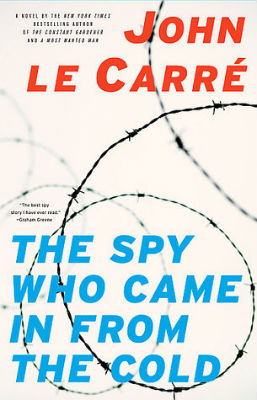
Le Carre sets the standard for the intellectual spy thriller. While this is a George Smiley novel, you only see him in the shadows. The lead character in this novel is Alec Leamas, an MI6 operative running things in Cold War Germany before he gets sacked for a failed operation. He’s sullen, sarcastic, cunning, and quite likable. You can read the book’s description if you want to find out about the story. I’m here to tell you why I liked it.
Le Carre’s strength is the intricate web of lies that his characters weave around each other. The entire novel, like most Le Carre tales, is a dance of spiders, each trying to catch the other in their trap. Playing perfectly into this dynamic are the high-stakes consequences that result from seemingly insignificant exchanges of dialogue. In Le Carre’s world, it is not laser pens or grappling hook brassieres that turn the tides of war, it is the ability to deceive and maintain deception until the end. Take this excerpt that epitomizes what I think is the theme of the novel:
“A man who lives a part, not to others but alone, is exposed to obvious psychological dangers. In itself the practice of deception is not particularly exacting. It is a matter of experience, a professional expertise. It is a facility most of us can acquire. But while a confidence trickster, a play actor or a gambler can return from his performance to the ranks of his admirers, the secret agent enjoys no such relief. For him, deception is first a matter of self defense. He must protect himself not only from without, but from within, and against the most natural of impulses. Though he earn a fortune, his role may forbid him the purchase of a razor. Though he be erudite, it can befall him to mumble nothing but banalities. Though he be an affectionate husband and father, he must within all circumstances without himself from those with whom he should naturally confide. Aware of the overwhelming temptations which assail a man permanently isolated in his deceit, Leamas resorted to the course which armed him best. Even when he was alone, he compelled himself to live with the personality he had assumed. It is said that Balzac on his deathbed inquired anxiously after the health and prosperity of characters he had created. Similarly, Leamas, without relinquishing the power of invention, identified himself with what he had invented. The qualities he had exhibited to ****: the restless uncertainty, the protective arrogance concealing shame were not approximations, but extensions of qualities he actually possessed. Hence, also, the slight dragging of the feet, the aspect of personal neglect, the indifference to food, and an increasing reliance on alcohol and tobacco. When alone, he remained faithful to these habits. He would even exaggerate them a little, mumbling to himself about the iniquities of his service. Only very rarely, as now, going to bed that evening, did he allow himself the dangerous luxury of admitting the great lie that he lived.”
Conversations kill in “The Spy Who Came in From the Cold”, so every word counts.

 Owen Banner